
Areopoli, Greece: A Complete Guide to Mani's Historic Capital
Quick Facts
- What it is: Areopoli is a town on the west coast of the Mani Peninsula, in the Laconia region of the Peloponnese, Greece, and the traditional capital of the Mani region.
- Population: 927 residents (2021 census)
- Former name: Tsimova, renamed Areopoli ("city of Ares") in 1912
- Why it matters: The Greek War of Independence was declared here on 17 March 1821, when Petros Mavromichalis raised his war flag in what is now Taxiarchon Square
- Nearest attraction: The Diros Caves, about a 15-minute drive south
- Nearest coast: Limeni, the old port of Areopoli, 1.5 km away
- Getting there: About 90 km from Kalamata International Airport, roughly a 1.5 to 2 hour drive; about 20 km from Gytheio
- Best for: History, Maniot architecture, and using as a base to explore the southern Mani Peninsula
Areopoli, Greece sits at the point where the Mani Peninsula narrows and turns wild, and most people who visit the region pass through it at least once, whether they mean to stop or not. It's worth stopping.
Where the Greek Revolution Began
The Greek War of Independence is usually dated from 17 March 1821, the day Petros Mavromichalis, known as Petrobey, raised his flag in Areopoli's main square and led roughly 2,000 Maniot fighters north toward Kalamata, which they took on 23 March. The square where the flag went up, Plateia Taxiarchon, still anchors the old town, and the stone church of the Taxiarches (the Archangels) that gives the square its name stands at one end of it.
The town wasn't always called Areopoli. Until 1912 it was Tsimova, a name with roots going back to Slavic settlement in the area. The change to Areopoli, meaning "city of Ares" after the Greek god of war, was a deliberate act of civic memory, tying the town's identity to its role in 1821. For more on how Mani fits into that wider revolutionary story, Everything Mani has covered it in Mani's Role in Greek Independence: A Legacy of Freedom.
By 1826, the fighting had come back to the area. Ibrahim Pasha's forces landed near Areopoli that June and were repelled after a battle at nearby Dyros, on the same stretch of coast where the Diros Caves now draw a very different kind of visitor.
What Areopoli Looks Like Today
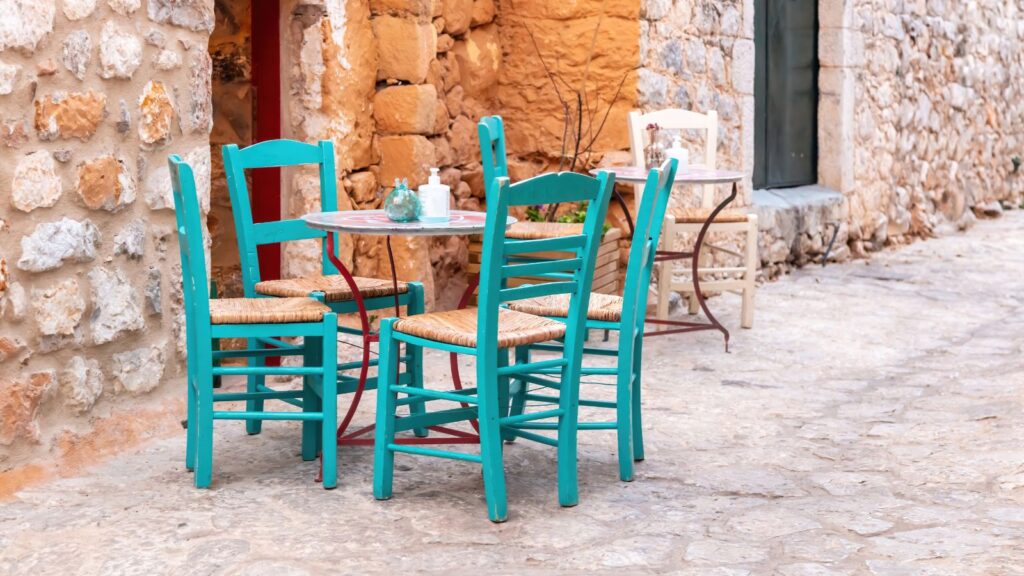
Areopoli is built from the same grey field stone as the rest of the Mani, and its skyline is still defined by defensive tower houses rather than church domes or windmills. These towers, some three and four storeys, were built by rival Maniot clans as much to watch each other as to fend off outsiders, and the narrow lanes between them were laid out to be defended, not admired, though they're easy to admire now.
The best place to get a feel for that history is the Byzantine Museum of Mani, housed in the Pikoulakis Tower next to the church of Agios Ioannis. The tower predates 1821, with a tower house added around 1850, and Ioannis Pikoulakis later donated the complex to the Greek state. Its permanent exhibition, "Stories of the Religious Faith of Mani," draws on finds from Byzantine basilicas and 11th and 12th-century church sculpture found across the region.
Saturdays bring the town's open-air market to the main square, with local producers selling olive oil, honey, cheese, and produce from villages further into the peninsula. It's a good gauge of what's actually in season, and a better place to buy olive oil than most tourist shops.
Things to Do Around Areopoli
The single most-visited site near the town is the Diros Caves, roughly a 15-minute drive south on the coast at Ormos Dirou. The tourist route through the caves runs 1,500 metres, with the first 1,200 metres covered by rowboat through a flooded cave system, guided by an oarsman rather than a motor, and the full circuit takes about 25 minutes. The caves reach 80 metres deep in sections not open to visitors, and archaeologists have recovered what's described as the largest deposit of hippopotamus bones found anywhere in Europe, alongside evidence of Neolithic and Paleolithic use of the site as a place of ritual significance. It's genuinely one of the more unusual things to do in the Peloponnese, not just in Mani.
Limeni, Areopoli's old harbour, is only 1.5 km down the hill and worth the short trip for lunch by the water or a swim off the rocks. Further south, the abandoned tower-house village of Vathia, around 30 km away, is one of the most photographed spots in the Mani for good reason: roughly 70 stone towers cluster on a single hilltop, largely empty since the mid-20th century, and the drive down gives a clear sense of how the peninsula turns starker and more exposed the further south you go. Everything Mani's Off-the-Beaten-Path coverage is a good place to find more spots like it.
For active days, check current tours, boat trips, and outdoor activities listed on Everything Mani, several of which run out of Areopoli or nearby Gerolimenas.
Where to Eat in Areopoli
Most of the town's tavernas and cafés sit around Plateia Athanaton and along the main pedestrian street leading off it, serving the kind of Maniot cooking built on olive oil, wild greens, and whatever the Saturday market had that week: syglino (cured pork), pasta with local cheese, and bread baked with olive oil rather than butter. Everything Mani keeps a running list of restaurants and cafés across the peninsula, including options in and around Areopoli, and the site's local products category is worth a look if you want to bring the olive oil home rather than just eat it here.
Where to Stay Near Areopoli
Areopoli works well as a base because it sits at the hinge of the peninsula, close enough to Limeni and Gerolimenas for day trips and still within reach of Kardamyli and Stoupa further north for a change of scenery. Everything Mani's Areopoli listings cover accommodation directly in town, and the site's broader accommodation category spans converted tower houses and villas elsewhere on the peninsula. If you're weighing Areopoli against the more resort-oriented villages, Everything Mani's guides to where to stay in Kardamyli and where to stay in Stoupa lay out those alternatives, roughly 45 minutes to an hour north by car.
Getting to Areopoli
The nearest airport is Kalamata International (KLX), about 90 km away, usually a 1.5 to 2 hour drive depending on the route through the mountains. Everything Mani's Kalamata Airport Flight Schedule is the place to check current routes before booking. From Gytheio, the other regional hub, it's about 20 km. There's no train into Mani, so a hire car is the practical option; Everything Mani lists car rental, taxi, and transfer services for anyone arriving without one.
FAQ
What is Areopoli, Greece known for?
Areopoli is known as the place where the Greek War of Independence was declared on 17 March 1821, when Petros Mavromichalis raised his flag in the town's main square. It's also known for its tower-house architecture and as the traditional capital of the Mani Peninsula.
How far is Areopoli from the Diros Caves?
The Diros Caves are about a 15-minute drive south of Areopoli, on the coast at Ormos Dirou.
What was Areopoli called before 1912?
The town was called Tsimova until 1912, when it was renamed Areopoli, meaning "city of Ares," to mark its role in the 1821 revolution.
Is Areopoli a good base for exploring the Mani Peninsula?
Yes. Areopoli sits close to Limeni, Gerolimenas, and Vathia to the south, and is within about an hour's drive of Kardamyli and Stoupa to the north, making it a workable central base for day trips across the peninsula.
How do I get from Kalamata Airport to Areopoli?
It's about 90 km, roughly a 1.5 to 2 hour drive by car, taxi, or private transfer. There's no direct train or regular public bus link, so most visitors arrange a hire car or transfer in advance.
Search
Categories
- Accommodation
- Activities
- Architecture
- Areopoli
- Awards
- Beaches
- Community
- Culture
- Destination Highlights
- Discover
- Entertainment
- Food
- Gerolimenas
- Greek Cuisine
- Guide
- Gythio
- History
- Hotels
- Kardamili
- Kardamyli
- Kotronas
- Living in Mani Greece
- Local Business
- Mani
- Marine Life
- Marmari
- Nature
- News
- Off-the-Beaten-Path
- Stoupa
- Sustainability
- Tradition
- Travelling
- Villas
- Wildlife