
Limeni, Greece: A Complete Guide to Mani's Harbour Village
Quick Facts
- What it is: Limeni is a small harbour hamlet on the west coast of the Mani Peninsula, in the Laconia region of the Peloponnese, Greece, part of the municipal unit of Oitylo.
- Why it matters: Birthplace of Petrobey Mavromichalis, the Maniot leader who raised the war flag in nearby Areopoli on 17 March 1821. He is buried in Limeni.
- Landmark: The Mavromichalis family tower, built in stages from the late 1600s to 1820, now a restored boutique hotel above the water.
- Swimming: No sand beach. Stone steps lead straight into clear water off the rocks.
- Known for: Astakomakaronada, lobster spaghetti, served at the handful of waterfront tavernas.
- Nearest town: Areopoli, about 3 km, a five-minute drive north.
- Nearest airport: Kalamata International (KLX), about 90 km, roughly 1.5 to 2 hours by car.
- Best for: A lunch stop, a sunset drink, or a short stay within easy reach of Areopoli and the Diros Caves.
Limeni, Greece doesn't take long to see, and that's rather the point. It's a single curve of a harbour on the Mani Peninsula's west coast, a row of stone tower houses built almost to the waterline, and a stretch of water so clear that boats look like they're floating on nothing. Most visitors arrive from Areopoli, three kilometres up the hill, stay for a swim and a plate of lobster pasta, and understand within about twenty minutes why people keep coming back.
The Village Where a Revolution Was Signed Off
Limeni is where Petrobey Mavromichalis was born, on 6 August 1765, and it's where he's buried. That single fact does more to explain the village than any description of the scenery. Petrobey, formally Petros Mavromichalis, was Bey of Mani from 1815 and the man who raised the war flag in Areopoli's main square on 17 March 1821, the date usually given for the start of the Greek War of Independence. He led roughly 2,000 Maniot fighters north to take Kalamata six days later. He died in Athens in 1848, but he was brought home to Limeni, the harbour his family had controlled for generations.
The Mavromichalis clan's power came from controlling this exact stretch of coast, and their tower still stands above it. The first section was built in the late 1600s, with a second section added in 1820, just a year before the revolution it helped launch. It stayed in the family for generations before being restored and reopened as a boutique hotel in 2011, a fairly typical fate for Maniot tower houses, which were built as defensive strongholds and have mostly found second lives as places to sleep. For more on how the wider region fits into that same story, Everything Mani has covered it in Mani's Role in Greek Independence: A Legacy of Freedom, and the Mavromichalis flag-raising itself is covered in more detail in the Areopoli guide.
What Limeni Looks Like Today
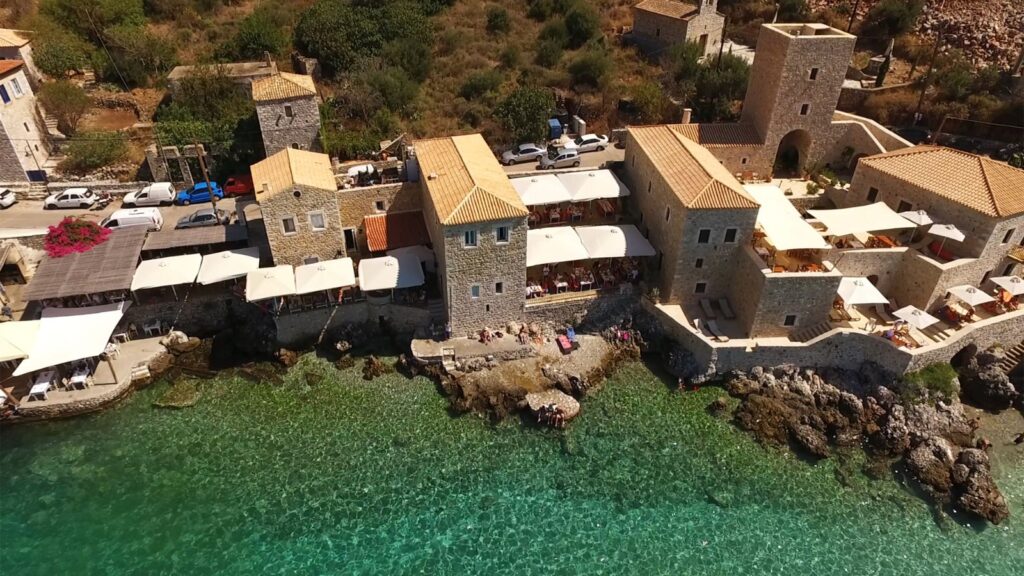
Limeni today is a working harbour with almost no infrastructure beyond a handful of tavernas, a couple of hotels, and stone stairs down to the water. There's no supermarket, no petrol station, no real shopping street. Areopoli covers all of that, and most people staying in Limeni drive up for anything beyond a meal or a swim. What Limeni does have is water clarity that photographs don't quite capture: the bay is sheltered, deep close to shore, and clean enough that the stone seabed is visible several metres down. There's no sand, the coast is rock and pebble, but the municipality has cut stairs into several points along the shore specifically so swimmers can get in and out without needing a beach at all.
The architecture is the same grey field stone used across the Mani, but Limeni's towers sit closer together and closer to the water than in most other villages, which is what gives the harbour its particular look in photos: square, fortified buildings stacked right against a turquoise bay, with almost no flat ground between them and the sea.
Where to Eat in Limeni
Limeni's food identity is built around one dish: astakomakaronada, lobster simmered in a tomato and wine sauce and tossed with spaghetti. It's not unique to Limeni, but the village's small string of waterfront tavernas has built a reputation around doing it well, largely because the boats bringing in the catch tie up a few metres from the kitchens serving it. Among Everything Mani's listings in the village, Teloneio Nikkei & Japanese Bar takes a different route, an all-day bar and restaurant on the water that pairs Laconian olive oil and local cheese with Japanese and Peruvian technique, sushi rolls and sunset cocktails rather than the traditional taverna menu. It's a useful contrast to the fish tavernas either side of it and a good stop for a slower dinner. Everything Mani's broader restaurants listing covers more options across the peninsula for anyone building out a longer food-focused itinerary.
Where to Stay in Limeni
Limeni works as either a base for a night or two, or a lunch-and-swim stop on a longer Areopoli stay. On the accommodation side, Everything Mani lists the Limeni Village Hotel, built from local stone above the bay with a restaurant and veranda bar looking straight out over the water, and Limeni Villa, a restored stone tower with three bedrooms, private terraces, and direct access to the water. Both trade on the same thing: waking up next to the harbour rather than driving down to it. Everything Mani's full Limeni listings page and its wider accommodation category cover other options nearby, and anyone weighing Limeni against a busier base should look at Everything Mani's guides to where to stay in Kardamyli or where to stay in Stoupa, both roughly 45 minutes to an hour north.
Things to Do Around Limeni
The Diros Caves are the obvious add-on, roughly a 15 to 20 minute drive southwest of Limeni on the coast at Ormos Dirou, and one of the more unusual sights in the Peloponnese: a flooded stalactite cave system toured largely by rowboat. Areopoli itself, three kilometres back up the hill, has the Byzantine Museum of Mani and the town's Saturday market, both covered in Everything Mani's Areopoli guide. Further south, the fishing village of Gerolimenas and the abandoned tower village of Vathia make a longer half-day loop for anyone with a car. For time on the water itself, Everything Mani's current boat trips listings cover options for seeing this stretch of coastline from a kayak or small boat rather than the shore.
Getting to Limeni, Greece
Limeni, Greece sits about 90 km from Kalamata International Airport (KLX), a touch further than Areopoli, and still roughly a 1.5 to 2 hour drive depending on the route through the mountains. Everything Mani's Kalamata Airport Flight Schedule is worth checking before booking connecting flights. Gythio, the other regional hub, is about 25 km away. There's no train into the Mani and no reliable daily bus service to Limeni specifically, so a hire car is the practical option for most visitors; Everything Mani lists car rental, taxi, and transfer services for anyone arriving without one. For a wider view of how Limeni fits into a full Mani itinerary, see Everything Mani's Mani Peninsula travel guide.
FAQ
What is Limeni, Greece known for?
Limeni is known as the birthplace and burial place of Petrobey Mavromichalis, the Maniot leader who raised the war flag in Areopoli in 1821, and for its turquoise, clear water and waterfront tavernas serving astakomakaronada, lobster spaghetti.
Is there a beach in Limeni?
No. Limeni has a rocky, pebble shoreline with stone steps cut into several points for swimmers to enter and exit the water. The nearest sand beach is a short drive away at Oitylo.
How far is Limeni from Areopoli?
About 3 km, roughly a five-minute drive. Limeni served as Areopoli's harbour historically and the two are usually visited together.
Where can I eat lobster pasta in Limeni?
Limeni's small cluster of waterfront tavernas is known for astakomakaronada. Everything Mani lists Teloneio Nikkei & Japanese Bar in the village for a different, Japanese-Mediterranean take on dining by the water.
Is Limeni worth visiting on a Mani Peninsula trip?
Yes, particularly as a half-day add-on to Areopoli or a lunch stop between Areopoli and the Diros Caves. Its small size means most visitors see it in an hour or two rather than staying multiple nights, though the village's hotels and villas make a short stay easy to arrange.
Search
Categories
- Accommodation
- Activities
- Architecture
- Areopoli
- Awards
- Beaches
- Community
- Culture
- Destination Highlights
- Discover
- Entertainment
- Food
- Gerolimenas
- Greek Cuisine
- Guide
- Gythio
- History
- Hotels
- Kardamili
- Kardamyli
- Kotronas
- Living in Mani Greece
- Local Business
- Mani
- Marine Life
- Marmari
- Nature
- News
- Off-the-Beaten-Path
- Stoupa
- Sustainability
- Tradition
- Travelling
- Villas
- Wildlife