
Gythio, Greece: A Complete Guide to Mani's Gateway Port Town
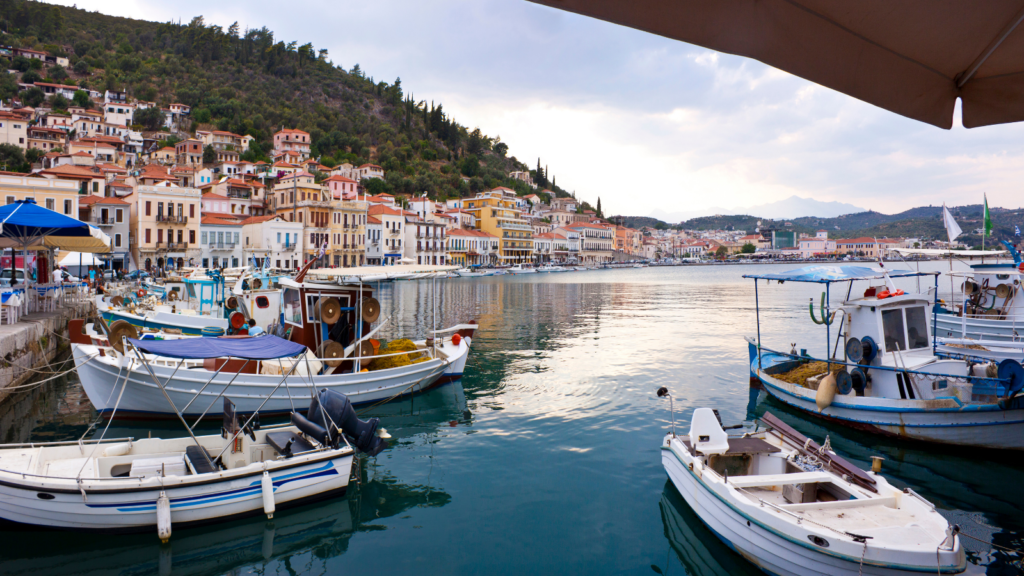
Gythio, Greece is the town most people drive through on their way into the Mani Peninsula, and that's a shame, because it's worth a stop on its own. This is Mani's largest town and its old working port, the place where Sparta sent its ships out to sea for over two thousand years. The pastel houses on the hill above the harbour, the causeway out to a small island tangled up in the story of the Trojan War, and the ferries still loading for Kythira make Gythio feel like somewhere with its own life, not just a stopover.
Gythio sits at the northeastern edge of the Mani Peninsula, on the Laconian Gulf, with the Taygetus mountains rising behind it. It's the seat of the municipality of East Mani and the first proper town most visitors coming from Athens or Sparta meet on their way into the peninsula, which is why it's long been called Mani's gateway. This guide covers what to see, where to eat and stay, how to get there, and how to use Gythio as a base for exploring the rest of Mani.
Quick Facts About Gythio
- Location: Eastern gateway to the Mani Peninsula, on the Laconian Gulf, Laconia, Peloponnese
- Population: Around 4,500 (2021 census), the largest town in Mani
- Distance from Areopoli: About 24km, roughly a 30-minute drive
- Distance from Sparti (Sparta): About 40km via the GR-39 national road, roughly 40 minutes
- Distance from Kalamata International Airport: Just under 100km, around 1 hour 45 minutes by car
- Known for: Roman ruins on Marathonisi islet, the Tzannetakis Tower museum, Mavrovouni beach, ferries to Kythira and Crete
- Best time to visit: Late May to June or September, for warm sea without peak-August crowds
How to Get to Gythio
By car, Gythio is around three to three and a half hours from Athens via the Moreas motorway and the Sparti road, or roughly 1 hour 45 minutes from Kalamata International Airport along the coast road. Areopoli is a further 24km, 30-minute drive south, and Sparti is about 40km north on the GR-39. Check flight options into the region on our Kalamata Airport flight schedule page before booking.
Gythio also has its own port, with ferries to Kythira and on to Kissamos in Crete, currently run by Seajets. The Gythio-Kythira crossing takes around two hours and twenty minutes, with sailings several times a week rather than daily; frequency shifts with the season, so check a live schedule before booking connecting travel.
A Brief History of Gythio
Gythio's mythical founders were Heracles and Apollo, who joined forces to build the city after settling a dispute over a sacred tripod, according to the geographer Pausanias. By the classical period it was Sparta's working port and a source of the purple dye extracted from murex shellfish in the Laconian Gulf, a trade that carried the town's name well beyond the Peloponnese into Roman times.
The Romans left a theatre carved into the hillside, rediscovered by archaeologist Dimitris Skias in 1891 along with the ruins of the ancient acropolis nearby. Much of the rest of ancient Gythium now lies underwater in the gulf, a legacy of the earthquake thought to have destroyed the city around 375 AD. The town's modern history centres on Marathonisi, the small offshore island also known by its ancient name, Cranae. In 1829, the Maniot chieftain Tzannetos Grigorakis built a fortified tower there, and that tower drew settlers back to the harbour below and effectively founded modern Gythio. A causeway to the island was built in 1898, and the tower itself opened in 1989 as the Historical and Ethnological Museum of Mani, still the best introduction to Maniot tower-house culture on the peninsula.
Top Things to Do in Gythio
Walk the causeway to Marathonisi islet. This is the best half hour in Gythio. Legend places Paris and Helen here on their first night together before sailing for Troy, a detail Homer references in the Iliad. The 1898 causeway leads to the Tzannetakis Tower museum and a marble lighthouse dating to 1873, with views back over the whole harbour.
See the Roman theatre. Tucked into the hillside on the western edge of town, this 1st-century AD theatre is one of the better-preserved Roman structures in the Peloponnese and free to visit.
Browse the Saturday market. The weekly street market fills the town centre with local produce and household goods, a good read on everyday life in Mani outside the tourist season.
Walk the seafront promenade. The paved harbourfront, lined with cafes and tavernas, is where the whole town gathers in the evening once the fishing boats come in.
Day-trip to Castle Passava. About 5km southwest, this ruined 13th-century castle guards the old passage into deeper Mani, above the site of ancient Las, with quiet, sweeping views down the coast.
Hike down from Taygetus. The E4 European long-distance path descends from the Profitis Ilias peak past the Monastery of Panayia Yiatrissa and finishes in Gythio, making the town a natural endpoint for one of the region's better day hikes.
Best Beaches Near Gythio
Mavrovouni is the main event: a long stretch of sand starting about 2km south of town, with shallow, clear water that suits families. It's the most developed beach nearby, backed by tavernas and small hotels; see our Mavrovouni location page for more.
Selinitsa and Vathi, both a short drive from the centre, are smaller and quieter, trading Mavrovouni's convenience for a more unpolished feel.
Where to Eat and Stay in Gythio
Fresh fish is the reason to eat in Gythio. Harbourfront tavernas serve grilled octopus and whole fish straight off the boats docked a few metres away, alongside Maniot staples like fava, a smooth split-pea puree, and tyropita, a savoury cheese pie found on nearly every taverna menu in this part of the Peloponnese. Browse current options on our restaurants in the Mani Peninsula page.
For a place to stay, the Dimani Collection covers most needs under one small group. Dimani Suites sits a short walk from Mavrovouni beach with sea-view balconies and a poolside jacuzzi. The Writer's House by L Suites is a soundproofed, boutique stay right in the town centre near the waterfront. Bello Horizonte offers garden-set rooms and self-catering studios close to the coast, better suited to families and small groups. Between the three, there's a real option for couples, solo travellers, and families without leaving the same small collection.
Best Time to Visit Gythio
Gythio works year-round, but late spring and early autumn are the sweet spot: warm enough to swim, quiet enough that the harbour tavernas aren't full by 8pm. The town's Carnival, held every February with costumed parades through the centre, is worth timing a visit around for anyone interested in Greek tradition outside the summer season. For a fuller picture of each season in Mani, see our guide to Mani through the seasons.
Using Gythio as a Base for the Mani Peninsula
Because it sits at the peninsula's entrance, Gythio makes a practical base for exploring the rest of Mani without constantly repacking the car. Areopoli, Mani's historic capital and gateway to the Diros Caves, is half an hour south; our Areopoli guide covers it in full. The harbour village of Limeni sits just beyond that, and the resort towns of Kardamyli and Stoupa are within an hour's drive up the coast. Our Mani Peninsula travel guide is the best starting point for the full lay of the land, and our own day in Gythio is worth a read for a more personal look at the town.
FAQ: Gythio, Greece
What is Gythio known for?
Gythio is known as the historic gateway to the Mani Peninsula and the ancient port of Sparta. Today it's known for the Tzannetakis Tower on Marathonisi islet, a well-preserved Roman theatre, ferry connections to Kythira and Crete, and Mavrovouni beach just south of town.
How do you get to Gythio from Athens?
By car, around three to three and a half hours via the Moreas motorway and the Sparti road. There's no direct train to Gythio; travellers without a car usually connect via bus through Sparti or fly into Kalamata and drive the coast road the rest of the way.
Is Gythio worth visiting, or just a stopover?
It's worth a full day on its own. The Marathonisi causeway, the Roman theatre, the working harbour, and Mavrovouni beach give it more to see than most people expect from what looks, at first glance, like a transit town.
Can you take a ferry from Gythio to Crete or Kythira?
Yes. Gythio has an active ferry port with services to Kythira and on to Kissamos in Crete, currently run by Seajets, several times a week rather than daily. Check a current timetable before booking connecting travel, since frequency shifts by season.
How far is Gythio from Areopoli and the rest of the Mani Peninsula?
Areopoli is about 24km south, roughly a 30-minute drive. From there, Limeni, Kardamyli, and Stoupa are all reachable within another hour, making Gythio a workable base for a loop through the wider peninsula.
What is the best beach near Gythio?
Mavrovouni, about 2km south of town, is the best-known and most developed beach nearby, with shallow water suited to families. Selinitsa and Vathi, both close by, are quieter alternatives for a less developed stretch of coast.
Search
Categories
- Accommodation
- Activities
- Architecture
- Areopoli
- Awards
- Beaches
- Community
- Culture
- Destination Highlights
- Discover
- Entertainment
- Food
- Gerolimenas
- Greek Cuisine
- Guide
- Gythio
- History
- Hotels
- Kardamili
- Kardamyli
- Kotronas
- Living in Mani Greece
- Local Business
- Mani
- Marine Life
- Marmari
- Nature
- News
- Off-the-Beaten-Path
- Stoupa
- Sustainability
- Tradition
- Travelling
- Villas
- Wildlife